Overview
Summary
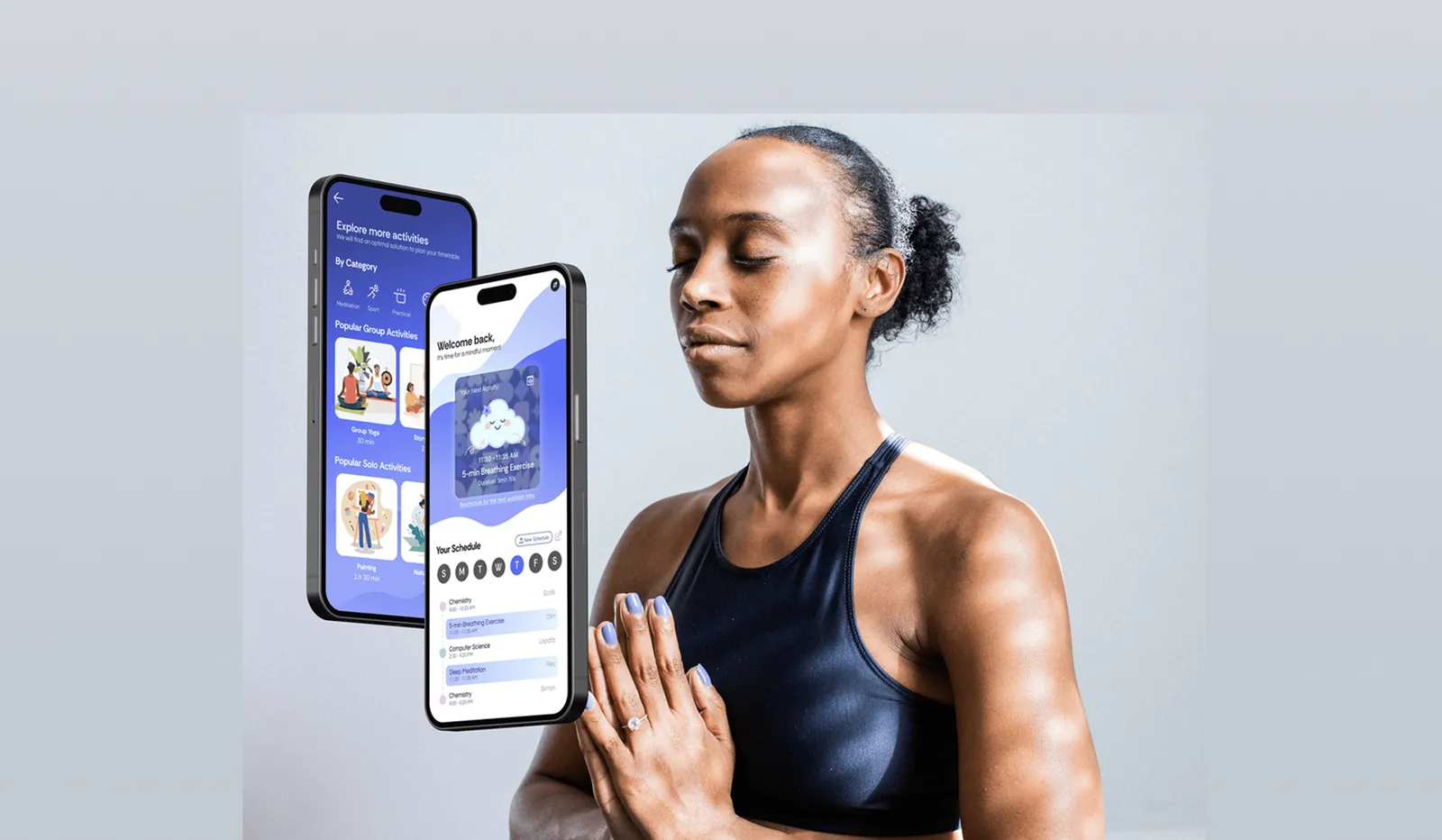
A student-focused mindfulness app that uses personalization plus schedule syncing, reminders, and goal-based planning to make habit-building easy and realistic.
Skills Learned
UX Research, User Interviews, Contextual Inquiry, Thematic Analysis, Affinity Mapping, Design Thinking, Human-Centered Design, Prototyping, Usability Testing
Tools
Figma, Google Meet, Google Form
Many WashU students told us mindfulness felt irrelevant, confusing, or impossible to fit around a packed schedule. We designed two connected solutions for students with little mindfulness experience: Mindfulness Week Passport Activity Fair, an in-person event, and Mindful Moments, a mobile app that carries the habit into everyday life.
The project followed a human-centered design process: interviews with fair attendees and non-attendees, a positive goal statement and How Might We questions, storyboards, prototype testing, and iteration with feedback from a guest designer. The team was four students across the Sam Fox School of Design & Visual Art and the McKelvey School of Engineering.
The challenge
Interviews with students who did and did not attend Mindfulness Week surfaced three barriers:
- Some students feel mindfulness is irrelevant to them, or don’t understand it.
- Some didn’t realize they were already practicing mindfulness in their own ways.
- Many find it hard to make time for mindfulness around busy schedules.
“Mindfulness is beneficial, but many people don’t believe it can help them, and some may be unaware of its benefits.”
Fabi, fair attendee
“Doing a group mindfulness activity is confusing and less helpful since the instructor had to take care of people with different knowledge on this topic, and she feels little connection with others. She prefers to do meditation with the app Headspace by herself.”
Alice, non-attendee
Opportunity
Mindfulness doesn’t have to look one way. It can mean different things to different people, as long as they feel connected to their mind and body. That points to two opportunities: connect mindfulness to each student’s own interests, and make it a personal experience for growth and self-compassion.
Positive goal statement
We want WashU students with little experience of mindfulness to have an opportunity to learn about the concept and explore a variety of practices based on their interests, needs, and physical and mental environment.
How might we
- help people reframe everyday activities to increase their mindfulness practice?
- help students discover practices that fit their unique preferences and personal styles?
- introduce mindfulness to groups who traditionally have less understanding of it?
Solution 1: Passport Activity Fair
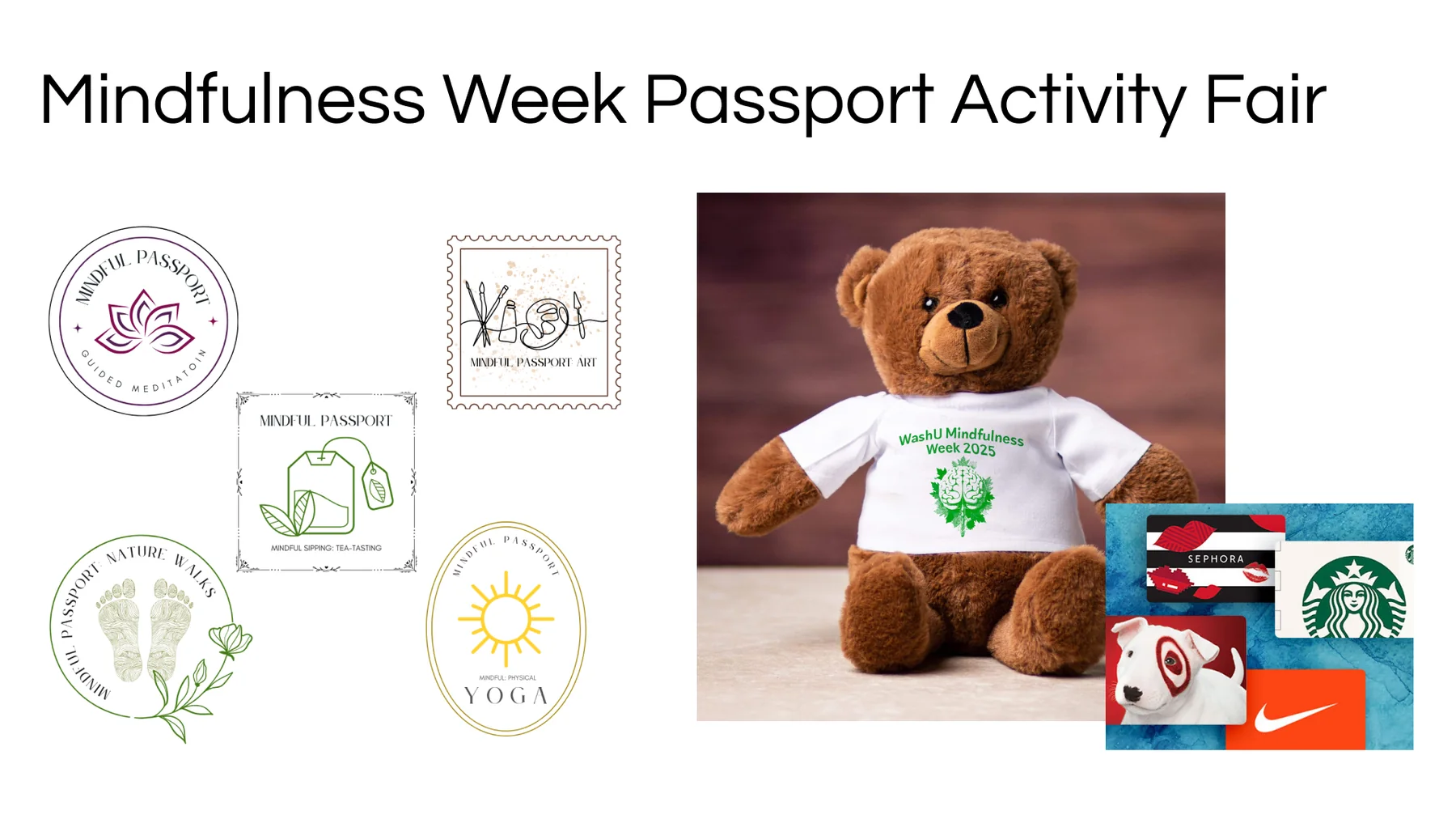
The fair lets students sample practices in a low-stakes format. Each student gets a passport and a campus map that guide them to stations across five categories: meditation, art, food, physical, and nature. Every activity earns a stamp, plus a small collectible, and completing the passport earns a grand prize.
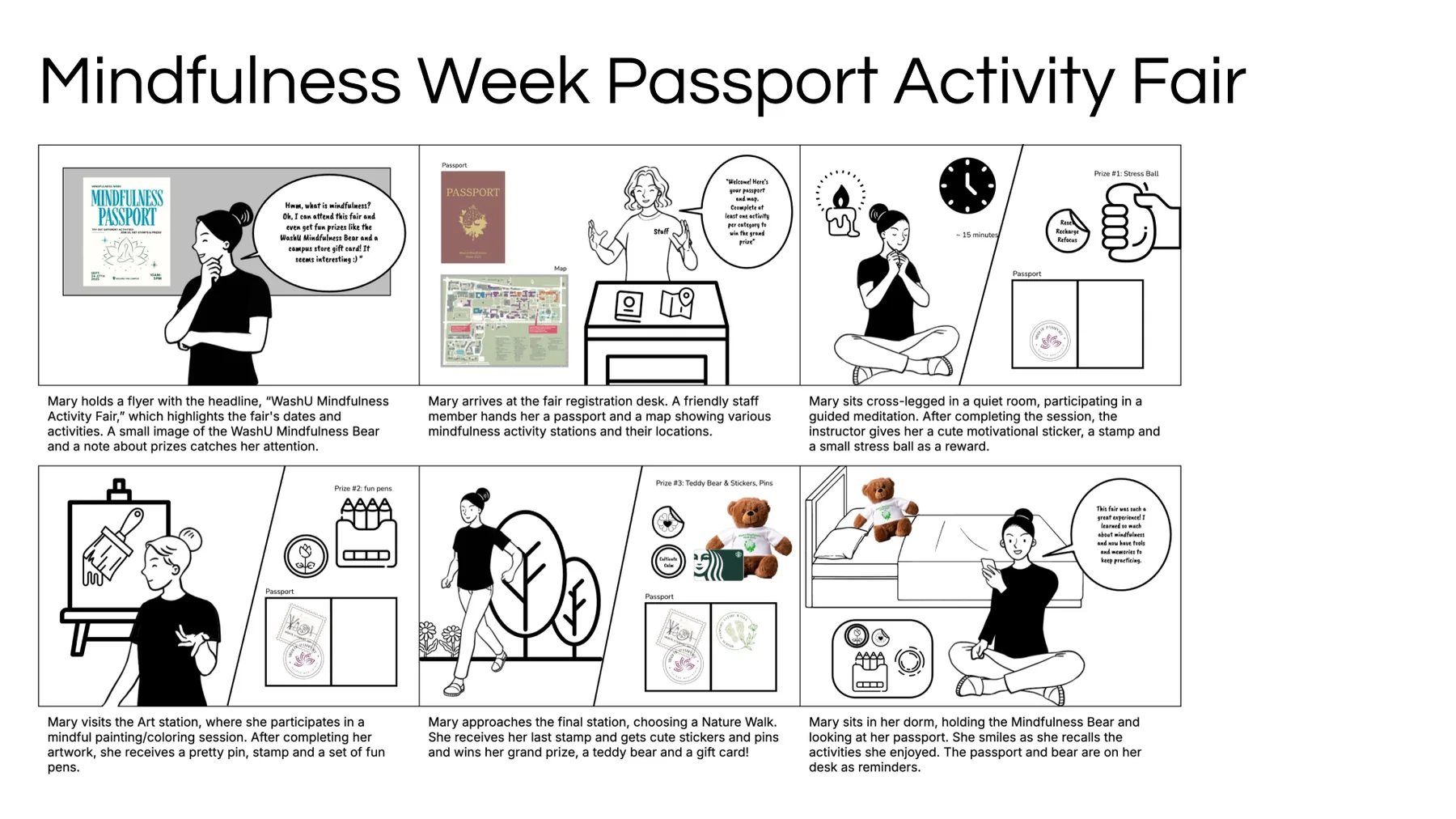
Our first storyboard assumed students would find the fair through a flyer. Interviews showed word of mouth through clubs and friends mattered more, so version 2 opens with a club president recommending the fair to a friend.
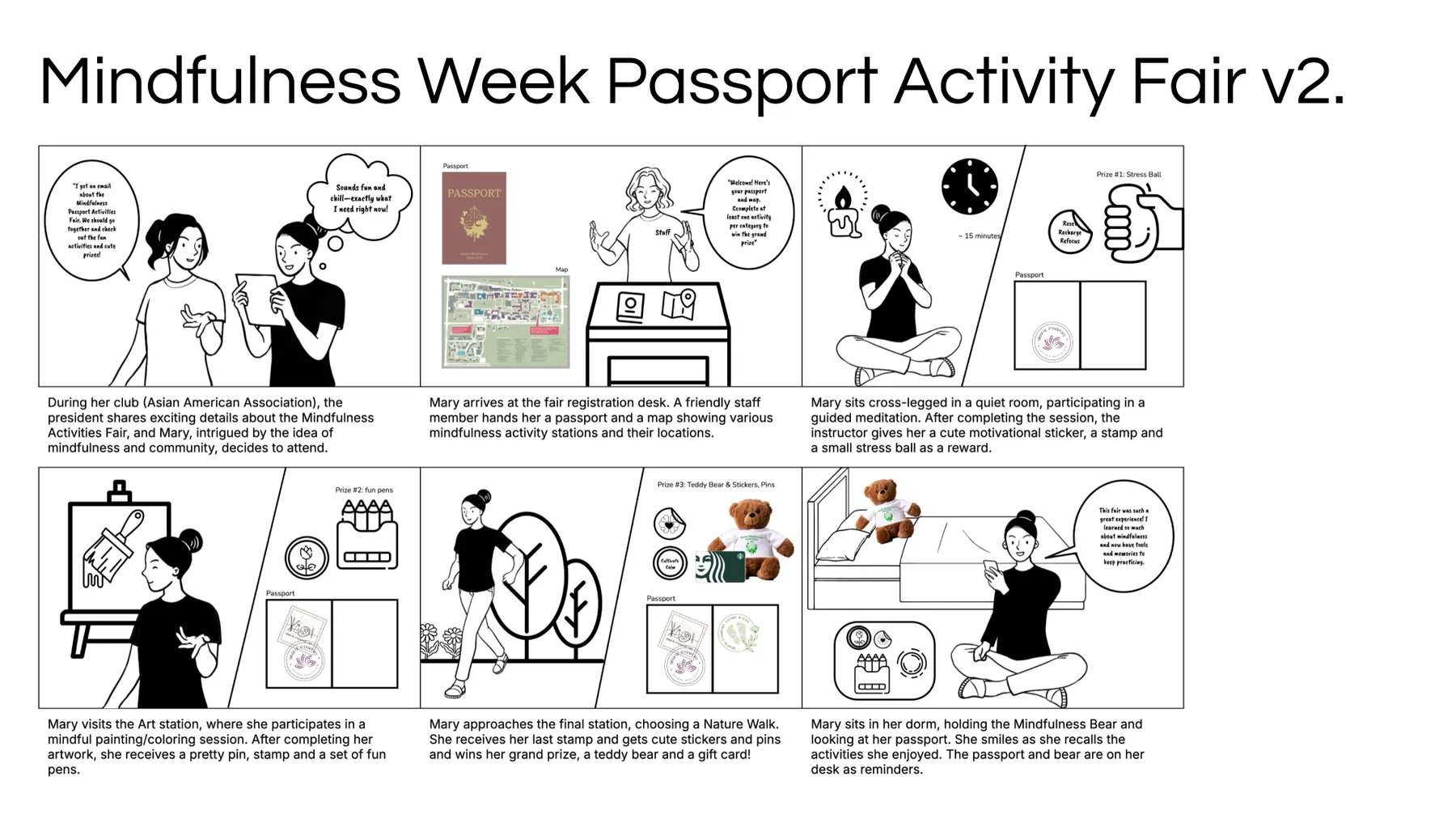
The passport, map, and rewards
The passport and map send students to stations by category, with a stamp and a small collectible at each stop.
Custom stamps mark each category, and the grand prize is a WashU Mindfulness Week bear plus a gift card.
Solution 2: Mindful Moments app
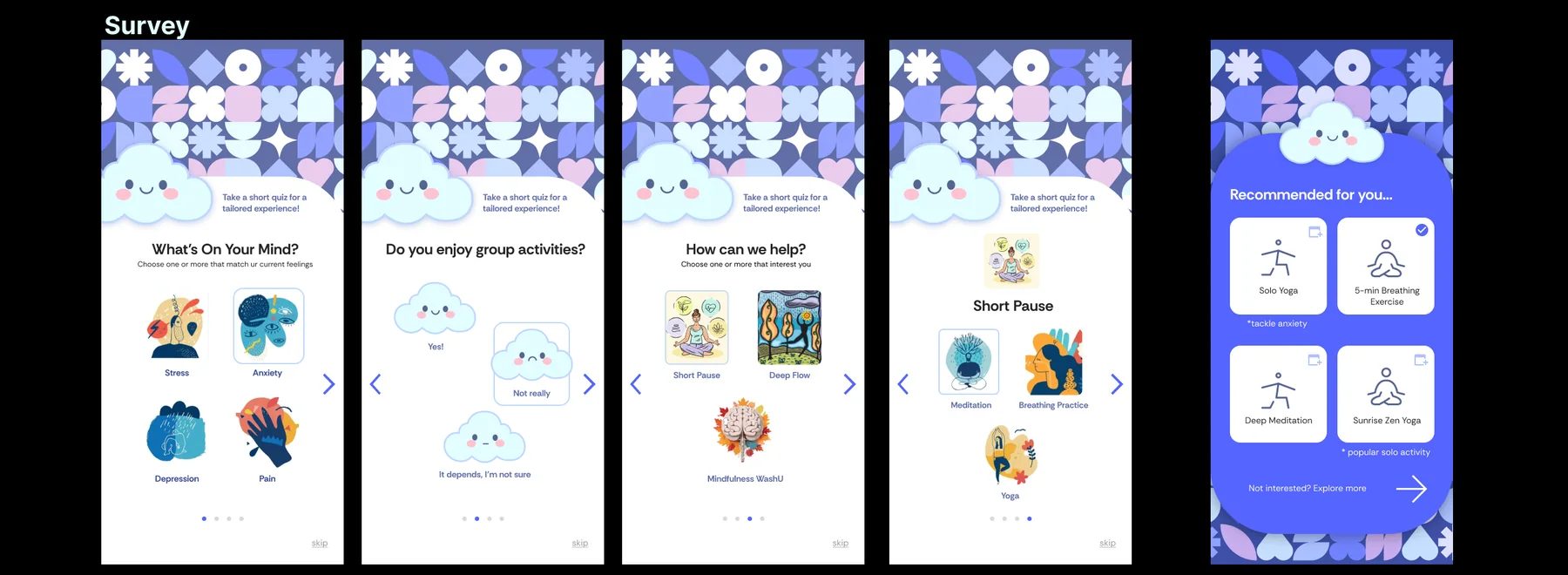
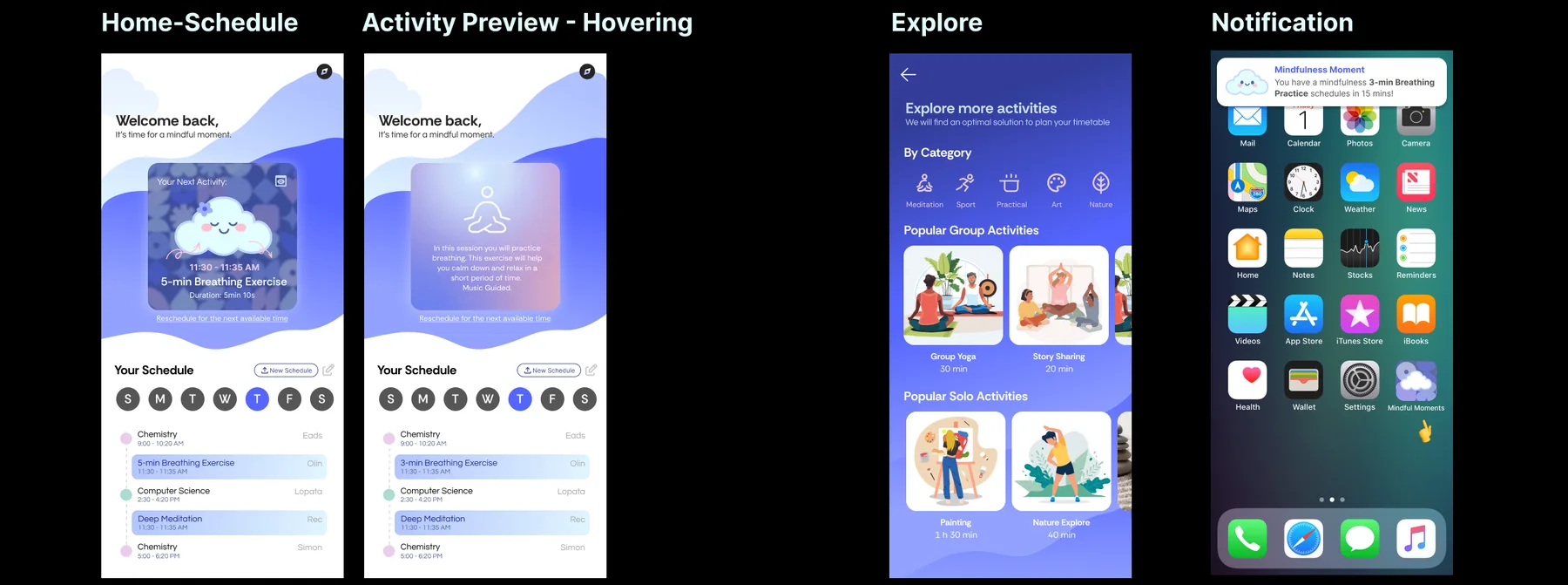
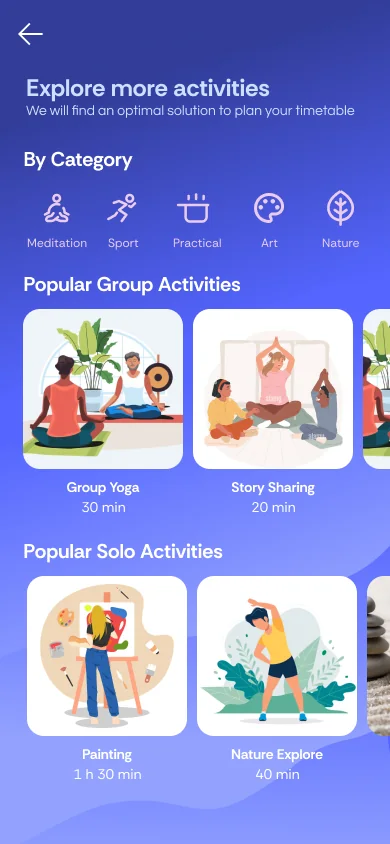
Mindful Moments builds mindfulness habits through personalized recommendations. A short quiz captures preferences, goals, and experience; the app syncs with the student’s calendar to find free moments, sends a reminder when it’s time, and suggests short practices for beginners and deeper ones for experienced users. A weekly to-do list built from the user’s goals adds structure, and a location tracker surfaces nearby activities.
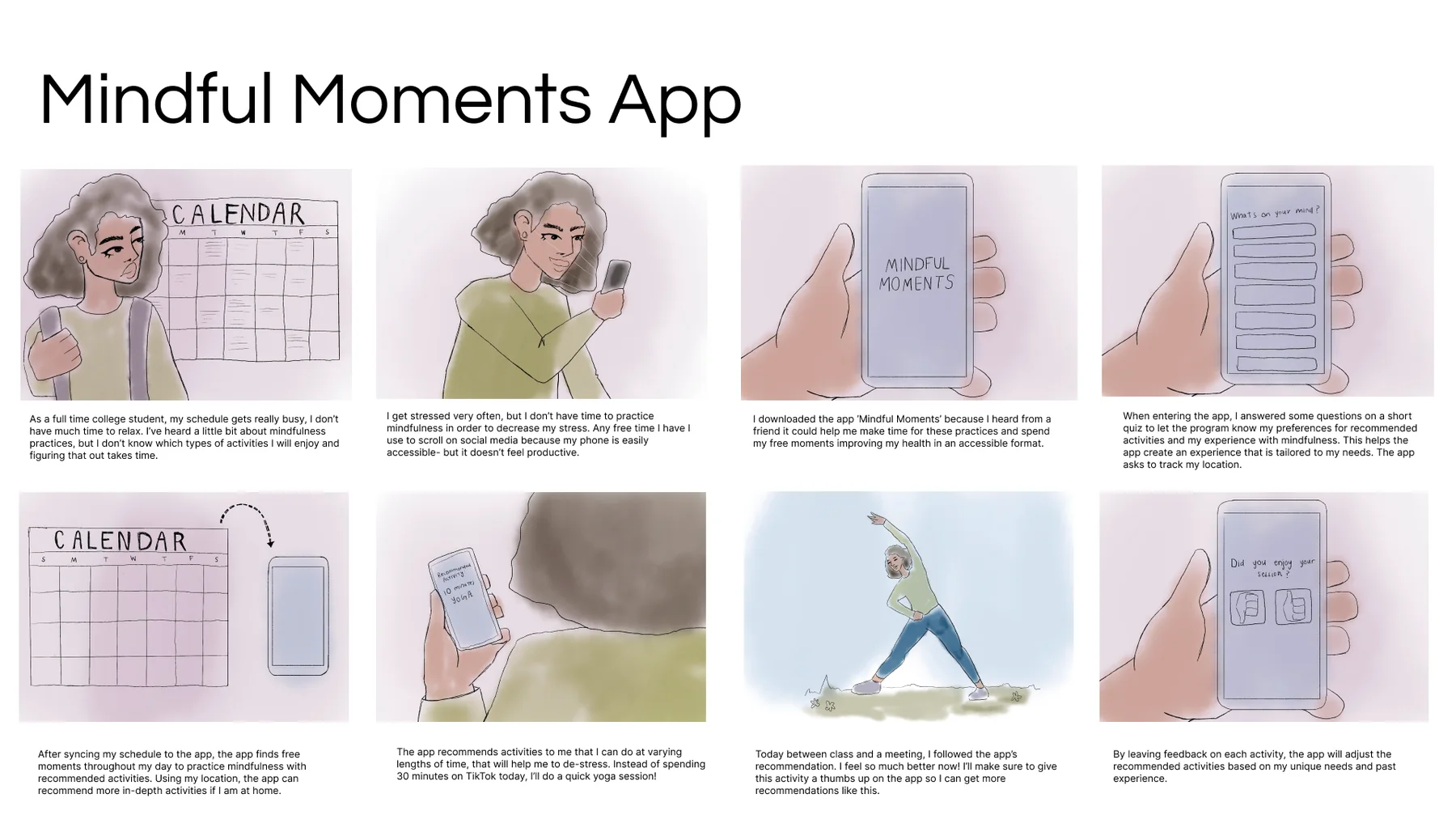
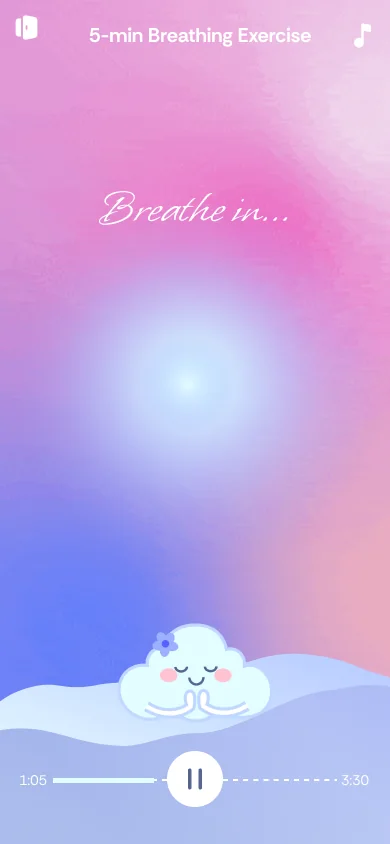
Two features came directly from prototype testing. Testers wanted a low-stakes way to stay motivated, so instead of streaks or competing with friends, a friendly cloud avatar guides and encourages them. And because scheduling was the barrier students named most, scheduling sits at the center of the app.
Design decisions
1. Spread the fair across campus
We debated centralizing the fair or dispersing it. Students’ classes cluster by school (business on the west side, engineering and Sam Fox on the east), and South 40 residents without class would find a trip across campus inconvenient. So we placed activities in all three areas and scheduled most in a morning and an afternoon session, so students can pick the time that fits.
2. A passport that doesn’t become a burden
The passport format encourages students to try different ways of practicing and fold mindfulness into their hobbies. We first planned to reward only students who finished every activity. After discussion and consultation with our guest designer, we changed it to at least one activity per category. Few busy students could do everything, and not everyone is interested in everything. Testing also showed that doubt about winning the grand prize made students less willing to join, so we added smaller collectibles (stickers, pins, pens, stress balls) along the way.
3. Five categories as a map of mindfulness
Many students skipped Mindfulness Week because they had never tried it or were unsure what it meant. Five familiar categories (meditation, art, food, physical, nature) cover most of the territory and let first-timers sample several kinds and quickly find what they like.
4. A three-question onboarding survey
Apps like Netflix use onboarding surveys to learn about users, and our research showed how varied student needs are. The survey asks about current challenges, whether the user is open to group activities (interviewees were split), and how much time they have: short pause practices for breaks, deep flow sessions of one to two hours for weekends, or Mindfulness WashU for fair events and locations.
5. AI-assisted time and location
Users upload their WashU Webstac schedule, Outlook, or Google Calendar. The system then finds the best time and place for activities that match their goals. For example, a student with classes on the west side who wants a short in-person break gets a five-minute session at the Olin meditation space. Many interviewees didn’t know WashU’s mindfulness resources existed, so the schedule also introduces them to convenient spaces.
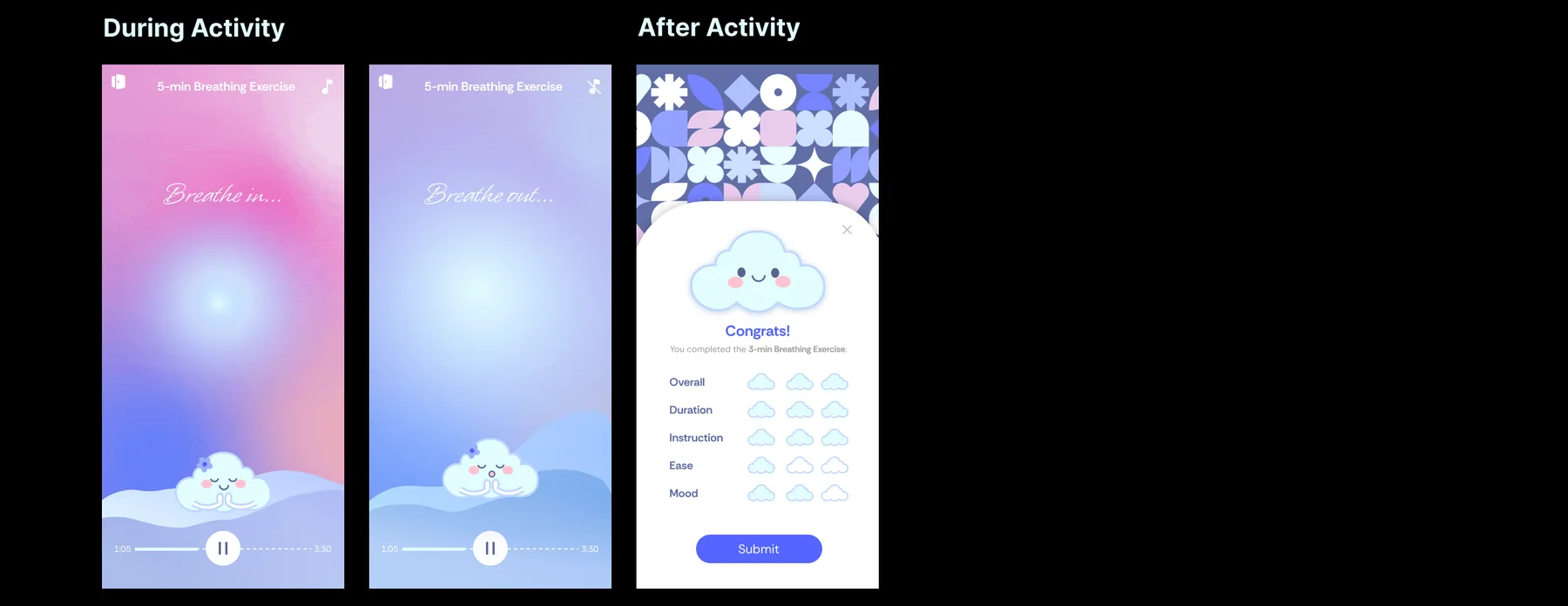
6. Feedback and explore
After each exercise, a quick check rates overall experience, duration, instruction, ease, and mood. This refines the matching algorithm, and the Explore tab lets users add activities directly. One interviewee loved meditating alone indoors and found group outdoor sessions less helpful, so even popular activities need to adapt to the person. Both features support the scheduler without overwhelming users.
7. A cloud avatar as guide
The cloud avatar gives the app a serene, friendly identity. On the activity page it demonstrates the posture and guidance, giving beginners someone to follow, which addresses both the lack of a physical guide and connection to the app.
Visual design
A calm blue palette and rounded Rethink Sans paired with a handwritten Whisper accent keep the interface soft and approachable.
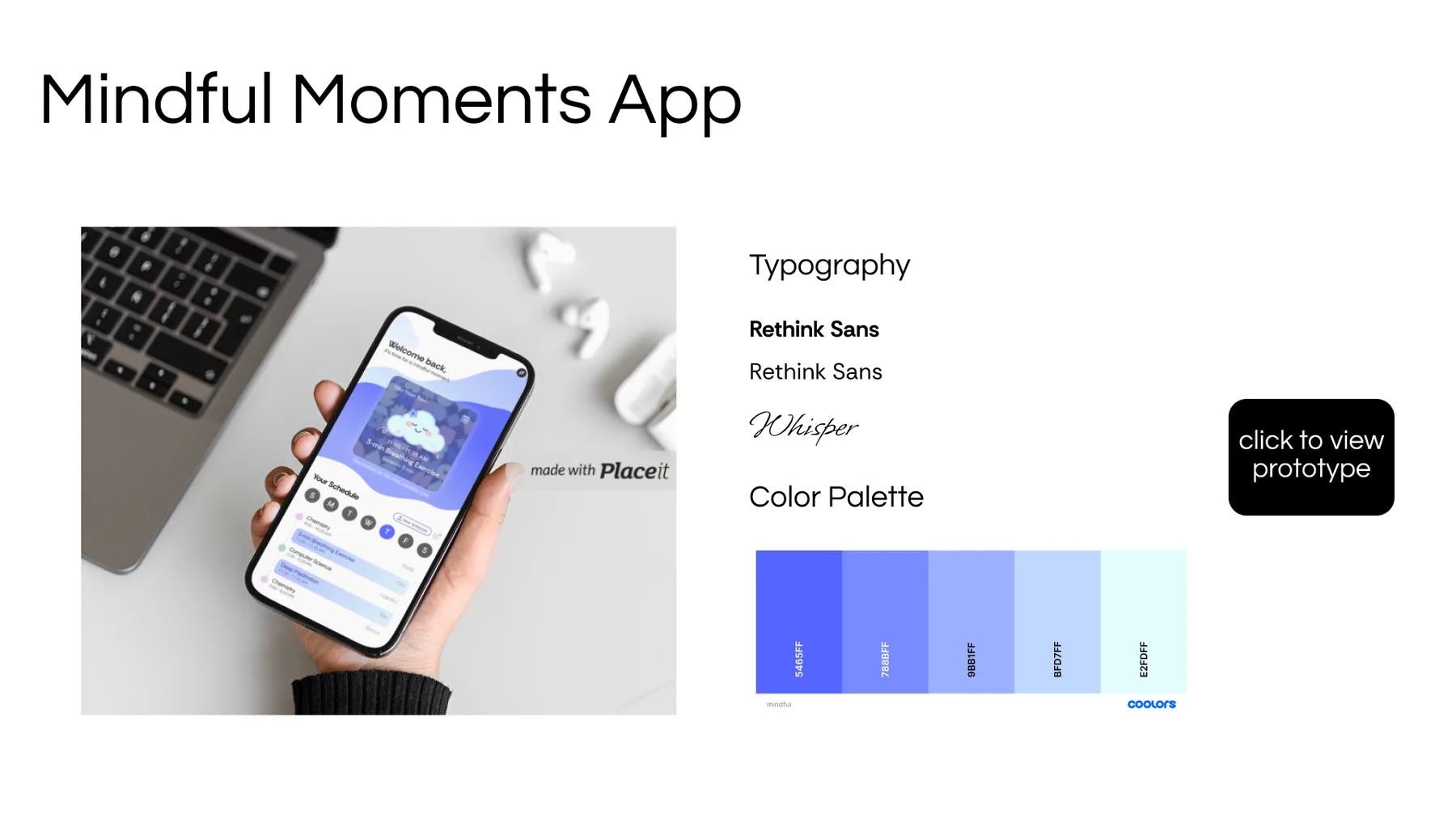
The avatar in three poses, with the full type and color system.
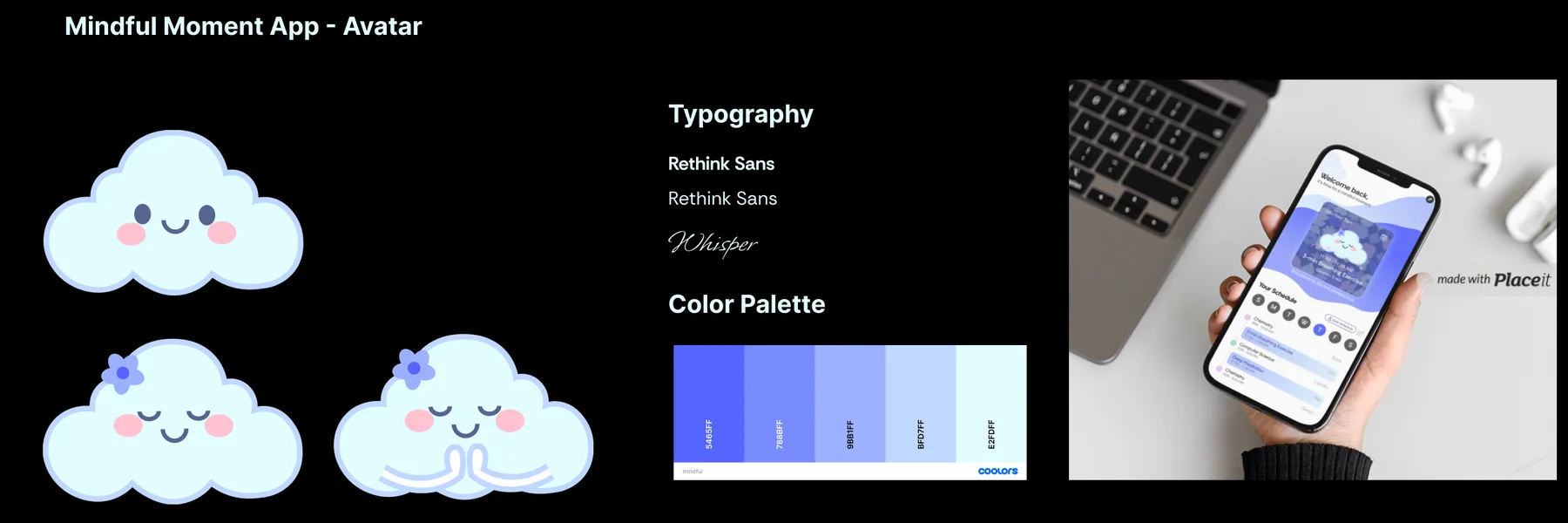
The app, step by step
Onboarding survey and recommendations
Schedule, explore, and notifications
During and after an activity
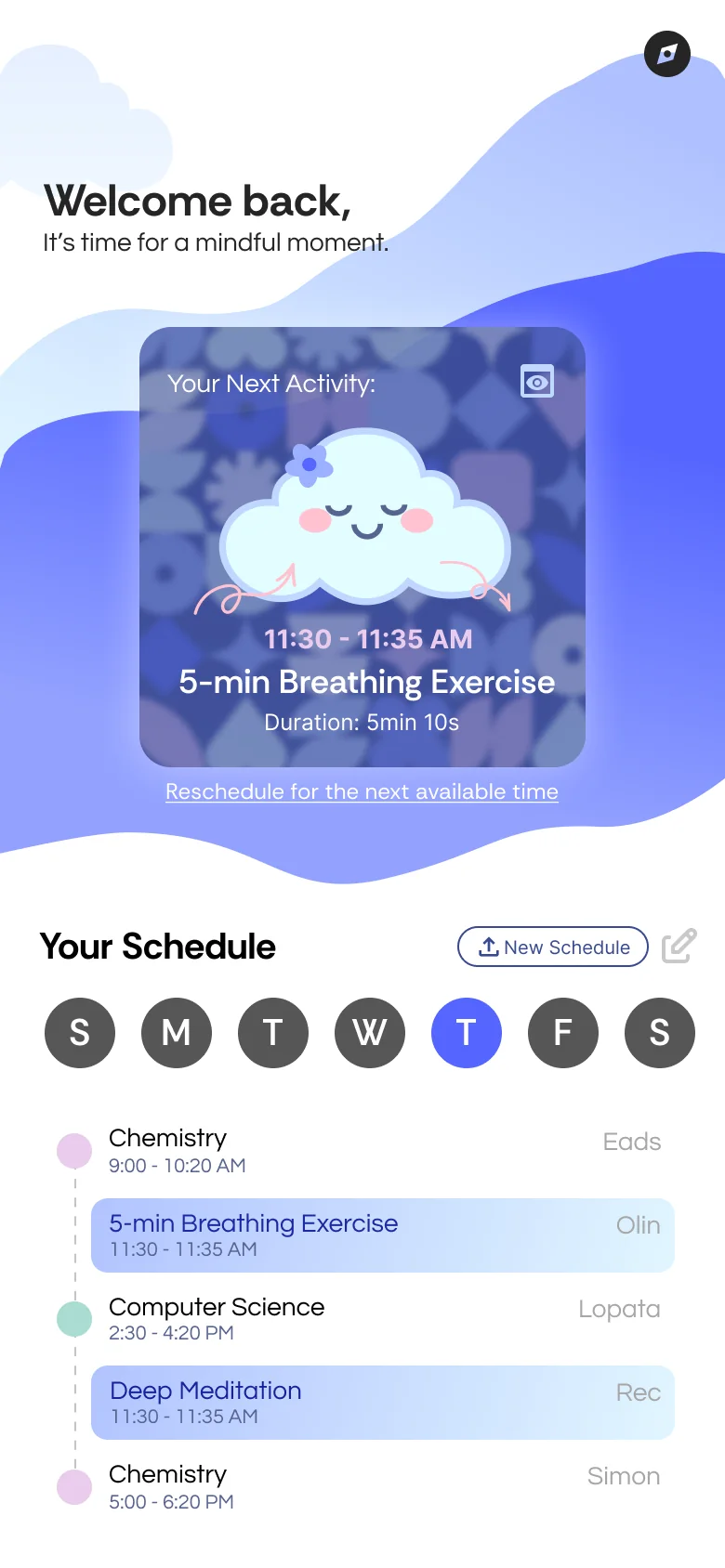
Testing the concept
We took the two concepts back to reviewers with three questions:
- Do the two approaches together address both unfamiliarity with mindfulness and busy schedules? What could be improved?
- How well do schedule syncing and reminders match students’ needs for building mindfulness into routines, and what would you prioritize?
- Will the passport and reward system motivate students to try different activities across campus, and how could it be more engaging for beginners?
The answers fed the changes described above: the tiered rewards, the word-of-mouth storyline, and the low-stakes avatar in place of streaks.